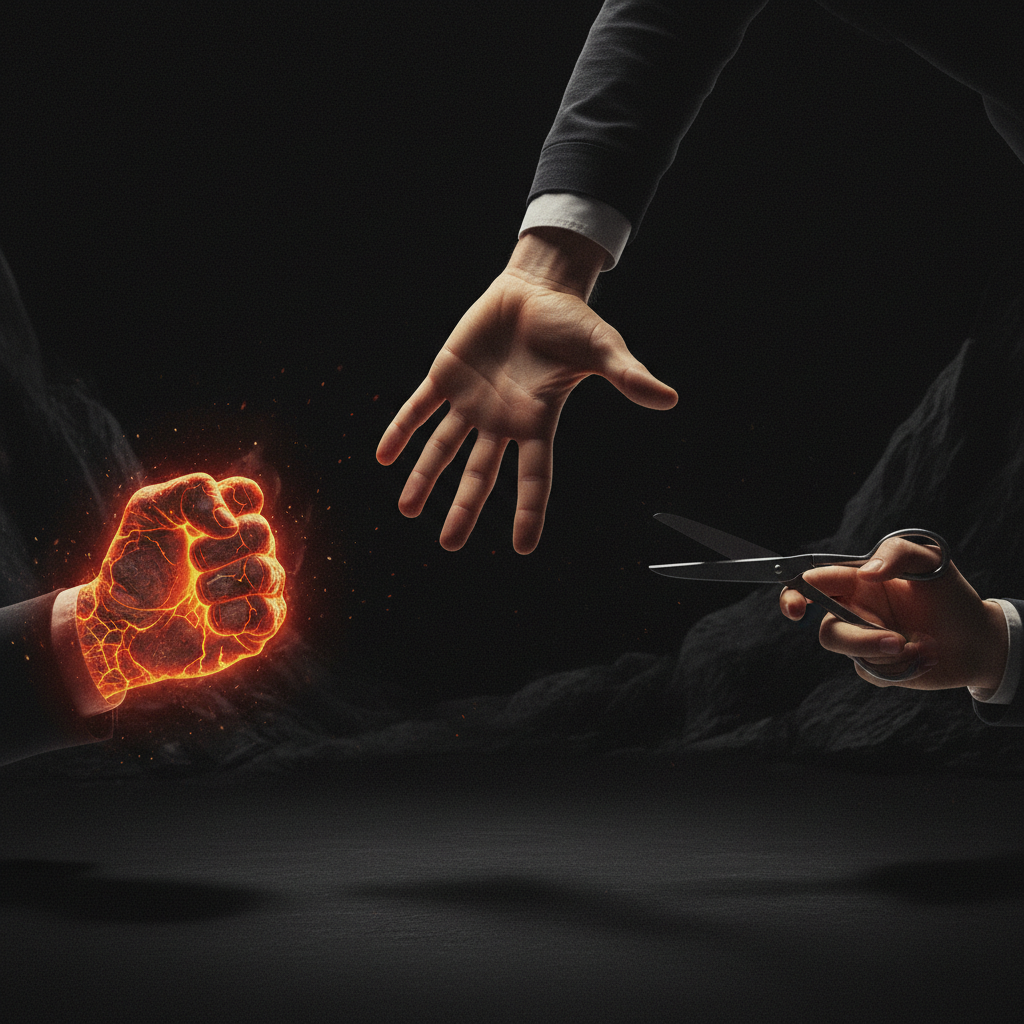
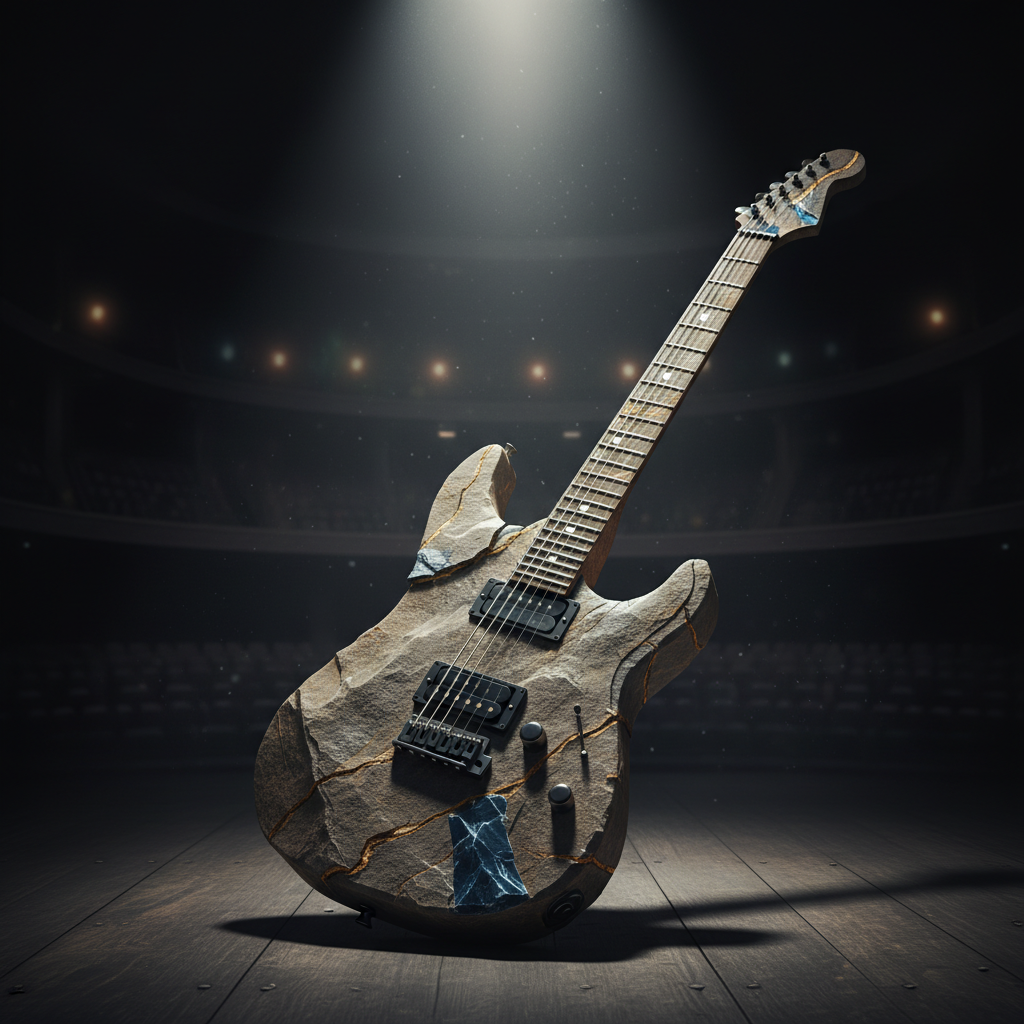
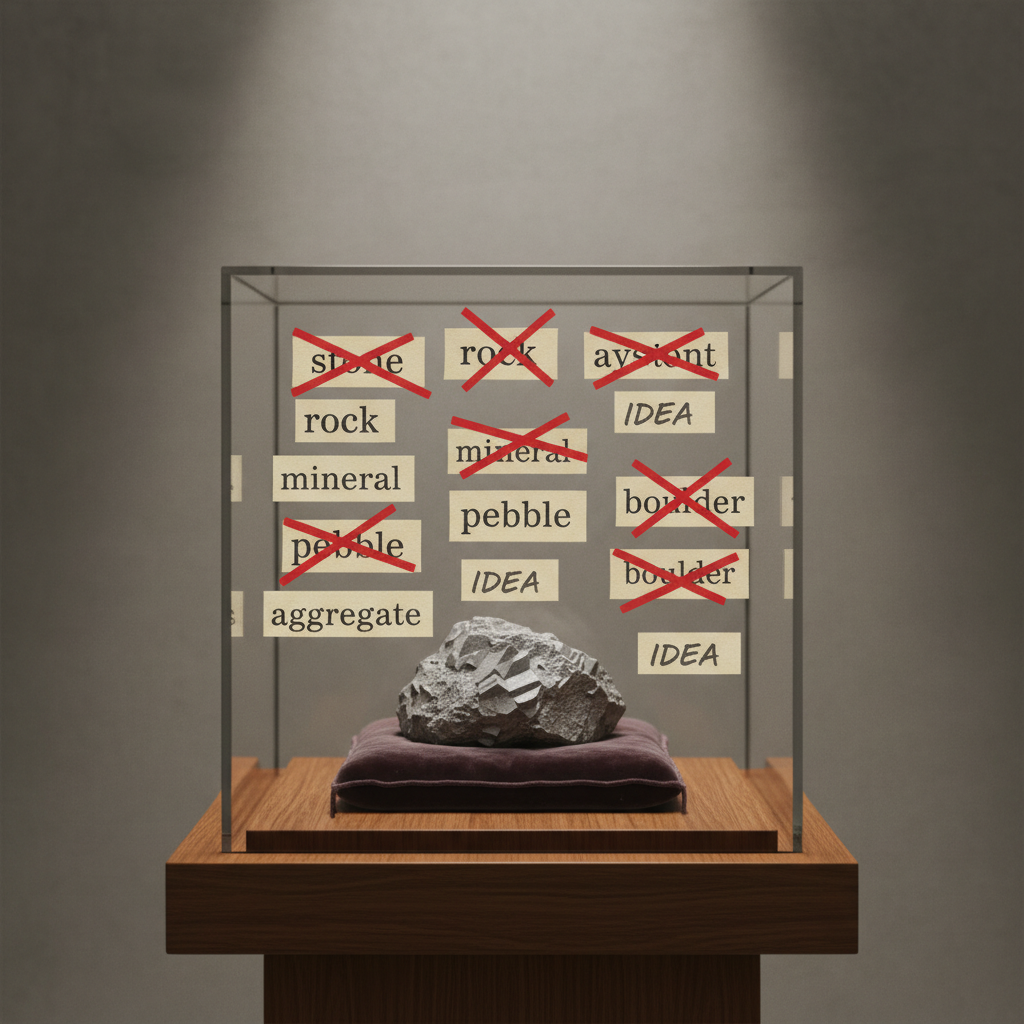
Across every culture, every mythology, every storytelling tradition on Earth, humans have imagined rocks coming to life. Independently, on every continent, for thousands of years. And the remarkable thing is not that we imagine stone creatures — it is that we almost always imagine them as heroes.
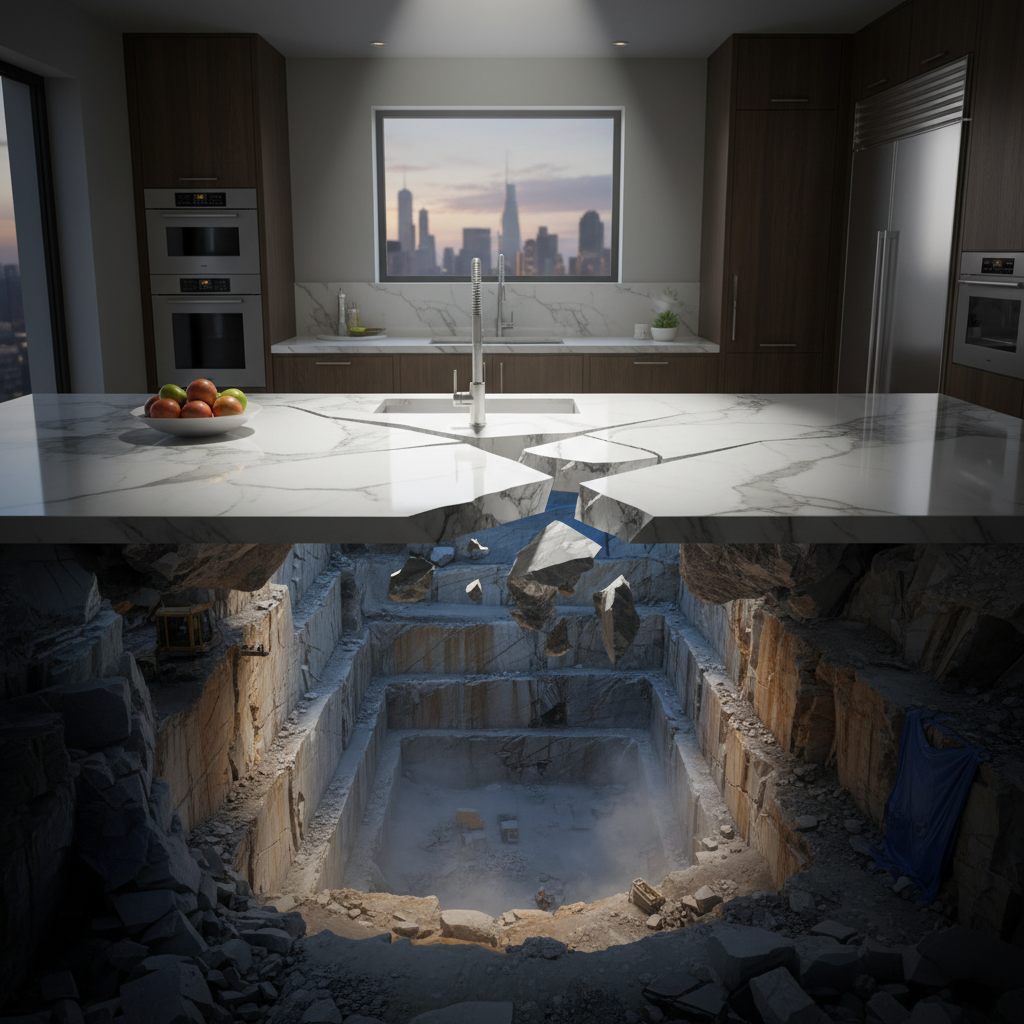
We crush 50 billion tons of rock annually. We heat limestone to 1,450°C. We grind mountains into highway fill. Then we go home, turn on a movie, and root for the rock monster. This is worth pausing on. The dissonance is not accidental. It is the shape of something we do not want to examine directly.
We exploit rocks more thoroughly than any other material on Earth. Then we write stories in which rocks come alive and protect us. This is not entertainment. It is a guilt dream.
The Ancient Stone
The impulse to animate stone is older than writing. But the oldest written version may be the Hurrian Song of Ullikummi (c. 1400–1200 BCE): a blind, deaf monster carved from diorite, placed on a giant’s shoulder, who grows until he reaches the heavens. Even the gods could not stop him. It took the primordial blade that once separated heaven from earth. Note what this tells us: 3,400 years ago, people already understood that stone was the one material that could challenge the divine. Not fire, not water, not wood. Rock.
The Jewish Golem of Prague inverts the pattern. Shaped from river clay by Rabbi Judah Loew ben Bezalel, animated by inscribing emet (truth) on its forehead — the golem was not a monster but a protector, created to defend the community from pogroms and blood libels. Deactivated by erasing one letter, changing emet (truth) to met (death). The most famous stone creature in Western folklore hinges on a single Hebrew character: the distance between truth and death. What makes this story endure is not the clay. It is the anxiety it encodes: that the thing we create to protect us might, if we lose control of the language, destroy us instead. Every AI panic of the 21st century is a golem story with better marketing.
In China, Sun Wukong — one of the most beloved characters in all of Asian literature — was born from a magic stone that received the nurture of heaven and earth. In Greece, Deucalion and Pyrrha repopulated the earth by throwing stones that became men and women. The Greek word for “people” (laos) was said to derive from the word for stone (laas). We are, in this telling, animated rocks who forgot where we came from. In Norse mythology, Hrungnir had a head, heart, and shield of stone; Thor shattered his skull with Mjölnir, but a fragment lodged permanently in the god’s own head. Even in defeat, the stone left its mark on a god.
In Shinto, iwakura are rocks understood not as dead matter but as yorishiro — vessels that attract and house divine spirits. The Meoto Iwa (“married rocks”) off the coast of Ise are renewed in ceremony every year. The Iroquois had Stone Coat, a race of beings with impenetrable rock skin. In the Hindu Ramayana, Ahalya was turned to stone and remained so for ages until Rama’s touch restored her — stone as the boundary state between alive and dead. In Africa, sacred rocks have served as conduits between the living and the spirit world since before recorded history, with the ruins of Great Zimbabwe centering on stones believed to connect the living to their ancestors.
Every continent. Every era. Every theological framework. Anthropologist Stewart Guthrie argued that animism — the attribution of spirit to natural objects including stones — is not a “primitive” belief but humanity’s original and most natural relationship with the material world. The organized religions are the deviation. Stone worship is the norm from which everything else departed. The conclusion is inescapable: imagining rocks as alive is humanity’s default setting. We have to be taught to see them as dead.
The Gentle Giant Paradox
Modern media inherited this tradition and did something unexpected: made rock monsters kind. Not occasionally. As a rule.
Korg from Thor: Ragnarok (2017) is eight feet of living stone who apologizes when he bumps into things. Taika Waititi based the voice on Polynesian bouncers he grew up around — men whose physical presence was inversely proportional to their gentleness. The joke is the contrast. But the reason it works is that we want it to be true. We want the rock to be kinder than it looks.
The Rock Biter from The NeverEnding Story (1984) gets arguably the most devastating scene in children’s cinema: sitting alone on a ledge, staring at his enormous hands, mourning that his “big, strong hands” could not save his friends from The Nothing. A rock creature, confronting its own powerlessness. The scene has made adults cry for four decades. Why? Because the Rock Biter is the one character in the film we expected to be invulnerable. Stone is supposed to endure. When it grieves, the promise of permanence breaks.
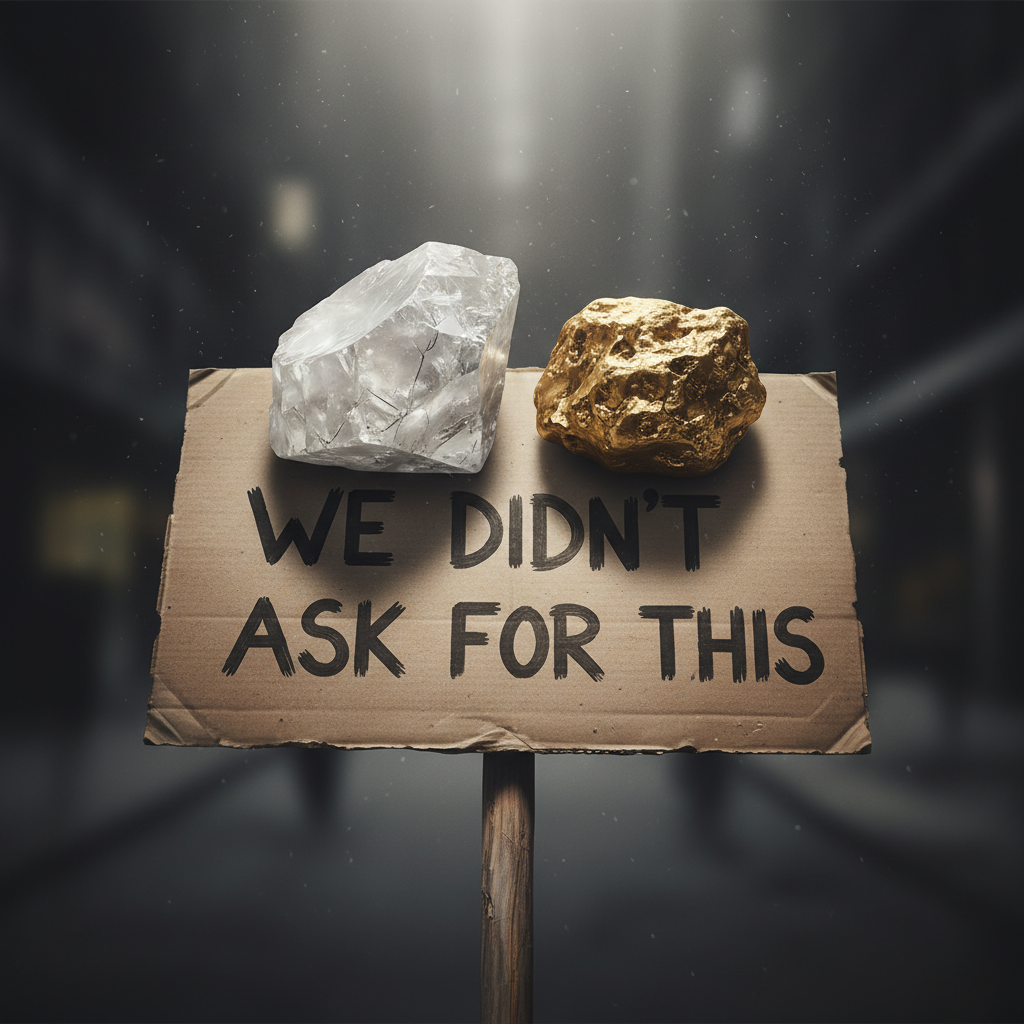
Ben Grimm — The Thing, from Marvel’s Fantastic Four (1961–present) — is a man trapped in a body of orange rock. “It’s clobberin’ time” is the catchphrase. But the character’s actual story is about grief, identity, and whether a heart of gold counts when you look like a quarry wall. He never asked for this. His struggle to accept his rocky exterior mirrors real experiences of disfigurement — and, quietly, the question of whether we can love something that looks like stone.
The Horta from Star Trek’s “The Devil in the Dark” (1967) may be the most important rock creature in science fiction. A silicon-based lifeform that looks like a flat rock, initially presented as a terrifying monster killing miners. Then the reveal: she is a mother, protecting her eggs. The miners had been unknowingly destroying them. The “monster” was a parent. The “heroes” were the threat. One of Trek’s foundational “the real monster was us” stories — and it chose a rock to deliver the lesson. This is the pattern in miniature: we assume the stone is hostile, discover it is protecting something, and realize too late that we were the ones doing harm.
Korg apologizes when he bumps into things. The Rock Biter weeps about his powerlessness. The Thing hides behind bravado because he’s afraid of what he sees in the mirror. The hardest material in fiction consistently conceals the softest heart. This is not a coincidence. It is a wish.
The Digital Stone Age
Dungeons & Dragons (1975) codified the golem hierarchy — Flesh, Clay, Stone, Iron — and every RPG since has inherited it. The lineage runs directly from the Golem of Prague through Gary Gygax to every stone construct in Dark Souls, Baldur’s Gate, and Elden Ring. What D&D understood, and every successor replicated, is that stone golems are not simply enemies. They are tests. You fight them not because they are evil but because they guard something. The rock is always in the way of what you want. Sound familiar?
In Minecraft, the Iron Golem spawns as a village protector. Players can build one deliberately, echoing the golem-creation mythology with startling directness. And here is the detail that elevates it: Iron Golems offer roses to villagers. A construct of iron and stone, programmed to fight monsters, that pauses to give flowers. The developers encoded something the myth-makers knew three thousand years ago: the power of a rock creature is not in its strength. It is in the gap between what it looks like and how it behaves.
The Stone Talus from Zelda: Breath of the Wild offers the inverse. A cluster of boulders that assembles into a golem when you approach. You defeat it by mining the ore deposit on its head with a sledgehammer. You extract its minerals and move on. The game rewards you for this. Nobody in the design meeting said “wait.” It is the entire history of human-rock relations compressed into a 45-second boss fight.
Pokémon built an entire taxonomy around Rock-type creatures: high defense, low speed, weak to water. This is a remarkable encoding of real geology into game mechanics — rocks are tough but slow, and erosion defeats stone. An entire generation absorbed the basics of weathering from a Game Boy without realizing they were learning anything.
The Literature of Living Stone
Terry Pratchett, in his Discworld novels, did something no other fantasy writer attempted: he took “trolls are rocks” literally and followed the implications. His trolls are silicon-based lifeforms whose brains function like circuits. Their intelligence is inversely proportional to temperature: in cold mountain air, they are brilliant philosophers; in warm lowlands, they can barely form sentences. This is not just a joke. It is a thought experiment about what rock-based consciousness would actually be like — and a pointed observation about how we judge intelligence. His troll characters face prejudice from humans who see them as dumb rocks. Pratchett was writing about racism. He chose stone people to do it because the metaphor was perfect: we dismiss what we think is beneath us, and we are almost always wrong.
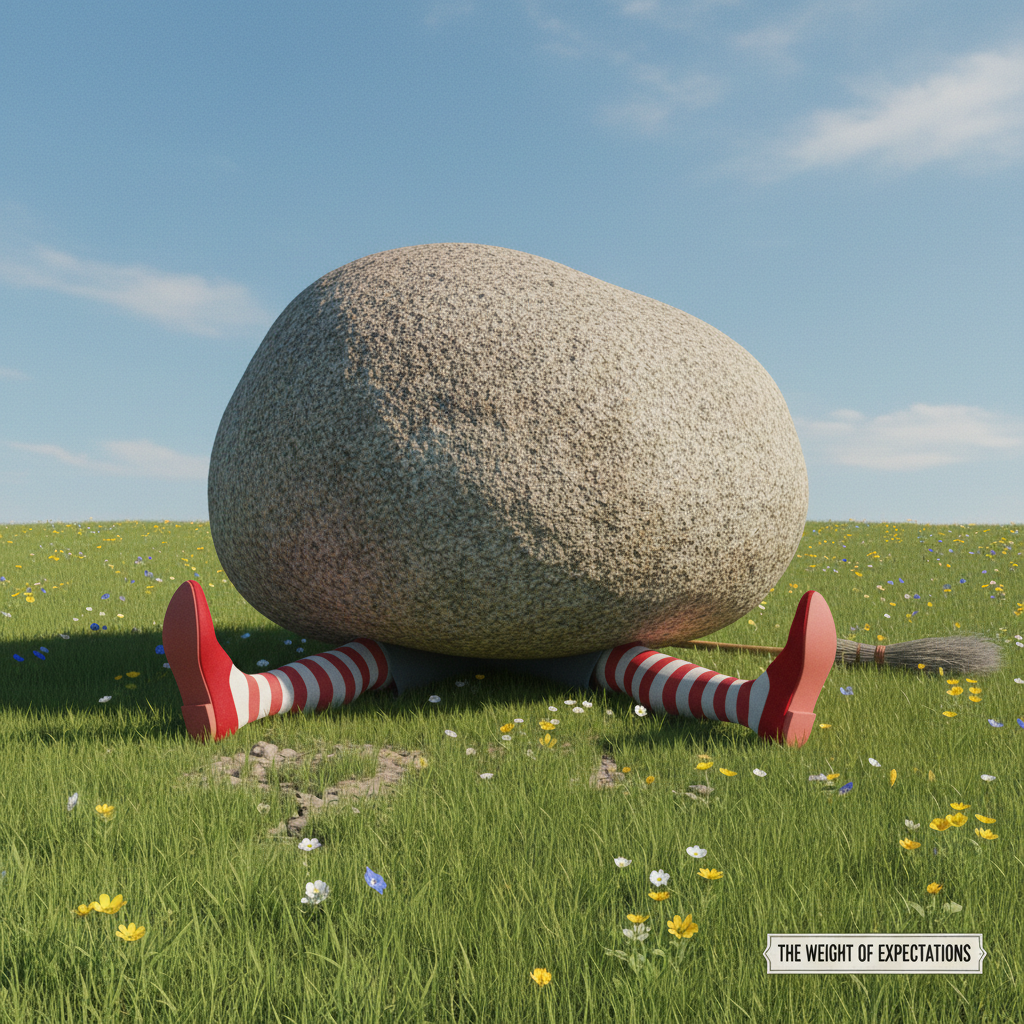
C.S. Lewis went the other direction. In The Lion, the Witch and the Wardrobe, petrification is the central metaphor for evil. The White Witch turns creatures to stone; her courtyard fills with lifelike statues frozen mid-gesture. Aslan breathes them back to life. And the Stone Table itself — the sacrificial altar — cracks when Aslan is resurrected. Stone equals captivity. Breaking stone equals redemption. Lewis made rock the symbol of everything that needed to be overcome — which tells you something about how deeply embedded the stone-as-prison metaphor runs in Western thought.
Tolkien, characteristically, was more ambiguous. His stone giants hurl boulders at each other during thunderstorms in the Misty Mountains — not out of malice but apparently for sport. They don’t even notice the dwarves. His trolls turn to stone at dawn, becoming part of the landscape — a folk explanation for standing stones that Norse people had been telling for centuries before Tolkien wrote it down. The mountains wake up. The trolls go back to sleep. The boundary between geology and biology, in Middle-earth, is a matter of lighting conditions.
What the Patterns Reveal
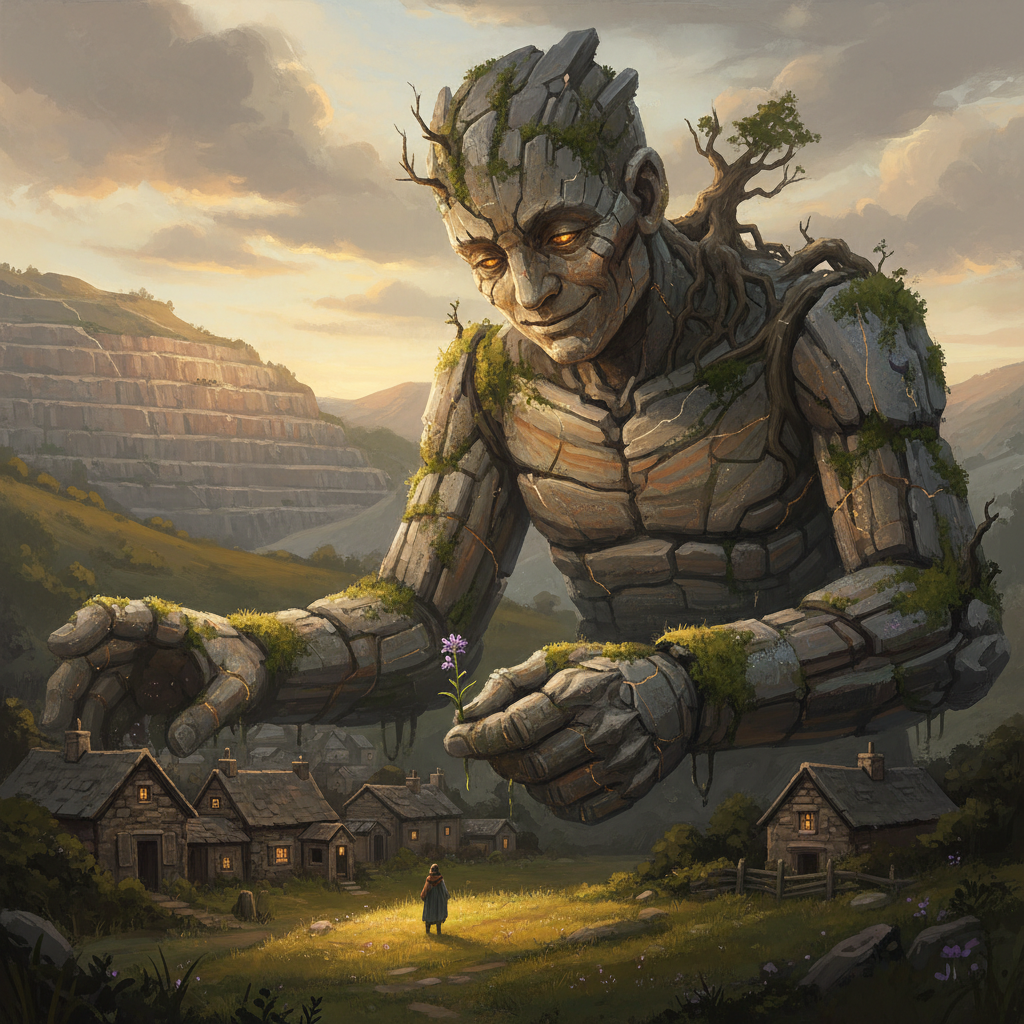
Rock creatures are more often heroes than villains. Korg, The Thing, the Rock Biter, the Horta, the Golem of Prague, Minecraft’s Iron Golem, Pratchett’s Detritus, Brock’s Geodude. The pattern is overwhelming and cross-cultural. When we imagine rocks alive, we imagine them on our side. This is not random. It is wish fulfillment from a species that has spent ten thousand years quarrying, and on some level needs to believe the quarry doesn’t mind.
The “gentle giant” dominates. Not the rampaging destroyer. The kind, emotionally vulnerable being trapped in or made of stone. Korg’s politeness. Grimm’s grief. The Rock Biter’s despair. The Iron Golem’s roses. We keep writing the same character: the hardest possible exterior containing the softest possible heart. This is projection. We are describing what we hope is inside the mountains we hollow out for copper — that beneath the indifference of granite, there is something that would forgive us if it could speak.
Weakness to water is near-universal. Pokémon Rock-types. Norse trolls. Golems. The Wicked Witch (earth-adjacent). This encodes an intuitive understanding of erosion: water, given time, defeats stone. But it is also metaphor. Water symbolizes emotion. The message buried in a thousand fantasy stat sheets is: feeling can break through even the hardest exterior. See: the Rock Biter, weeping. His tears are the weapon that finally defeats him — not The Nothing.
Petrification goes both directions. Trolls turn to stone (life becoming rock). Golems are rock given life. Medusa petrifies the living. Ahalya is restored from stone by a god’s touch. The boundary between alive and mineral is, in our collective imagination, disturbingly thin. We sense — correctly, at the atomic level — that the gap between us and the rocks is smaller than we pretend. The calcium in our bones was calcium in limestone first. The iron in our blood was iron in the earth. We are, chemically, rocks that learned to move. The myths knew this before the chemistry did.
Every culture on Earth has independently imagined rocks coming to life. Most imagined them being kind. This is either the most widespread coincidence in human storytelling, or a species-wide confession that we suspect the ground beneath our feet deserves better than what we give it.
The Verdict
We have told stories about living stone for at least 3,400 years. We have done it in cuneiform and CGI. In Norse eddas and Nintendo cartridges. We have made rock monsters the heroes of our myths, our films, our games, and our bedtime stories. And then we have gone outside, dynamited a hillside, and paved it into a parking lot.
The rock monsters are not the mystery. The mystery is why we keep imagining them as protectors while we keep operating the quarries. Why we write empathy for stone and then withhold it in practice. Why the Rock Biter’s grief scene makes us cry but 50 billion tons of annual extraction does not.
Perhaps the stone creatures in our stories are not fantasies. Perhaps they are apologies — addressed to a material that cannot read, from a species that cannot stop. Or perhaps they are something more unsettling: the faint, persistent suspicion that the ground beneath our feet is not as indifferent as we need it to be.